File photo
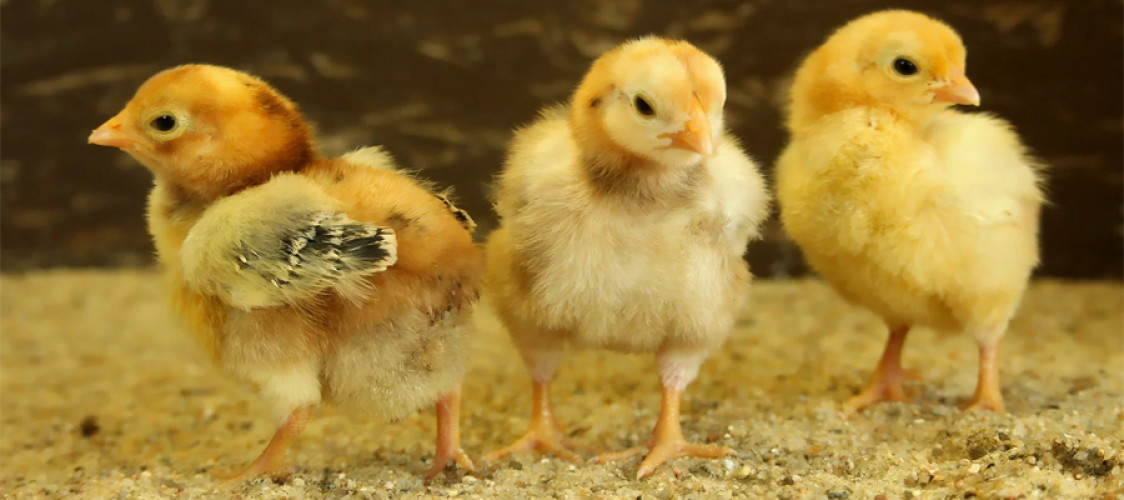
The government has finalized a draft of a new policy for the development of the country's poultry sector. The proposed policy proposes to ban the import of one-day-old chicks. At the same time, it has been said to impose conditions on the import of parent stock—that is, chickens that lay eggs for chick production.
Meanwhile, objections have already been raised about the draft policy. People involved in the sector fear that a complete ban on the import of one-day-old chicks could create a monopoly in the market. They have also expressed concern about the proposal to impose restrictions on the import of parent stock.
In this regard, Anjan Majumdar, Joint Secretary General of the Bangladesh Poultry Industries Association (BPIA), told Prothom Alo that if there is a need for imports in any crisis after the ban is declared, the policy will need to be revised, which will be time-consuming. At the same time, the import of parent stock (PS) will also face obstacles. Only a few institutions have the capacity to bring grandparent stock or grandparents from the United States and France. As a result, hatcheries will have to collect PS from those institutions. Farmers will also be forced to buy chicks from hatcheries at higher prices.
The draft policy is expected to be tabled in the interim government's advisory council meeting soon for approval. The draft policy states, "One-day-old chicks cannot be imported for commercial poultry farming. Only one-day-old grandparent stock and, in some cases, parent stock can be imported if there is a shortage of one-day-old chicks in the country."
The draft policy, titled "National Poultry Development Policy 2026," has been published on the website of the Ministry of Fisheries and Livestock for public comment.
Traders fear that even though the government is talking about reducing import dependence, the proposed policy may harm the interests of consumers and farmers. This is because the capacity to produce chicks and supply parent stock is currently concentrated in the hands of a few institutions. This may further increase dependence on these institutions.
The Bangladesh Poultry Industries Association (BPIA) has already written to the government on January 15, seeking an opportunity to discuss the proposed policy. Meanwhile, in a press release on Wednesday, BPIA expressed fears that the new policy could turn into a 'deep trap'.
In a letter to the Livestock Secretary, the organization said that if there is no opportunity to import, the matter may be monopolized by a handful of farms.
According to the organization, the total parent stock of broilers was imported from January to October 2025. At the same time, 1 lakh 6 thousand grandparent stock was imported. Currently, the price of a parent stock chicken is 550 to 600 taka. MA Quader, owner of Universal Hatchery, said that this price should be at most 100 to 120 taka. He expressed fears that the price may increase further if the import of parent stock becomes difficult.
In this regard, Jahangir Alam, former Director General of the Bangladesh Livestock Research Institute, told Prothom Alo that imports can be limited rather than banned completely. Because if problems like bird flu arise, imports may be necessary. Apart from that, eggs are also imported if necessary.
According to analysts, the poultry sector has become a huge industry in terms of food security and employment. Therefore, if any new policy is to be made, a public hearing should be held with the participation of all stakeholders.
When asked about the overall issue, the Director General of the Livestock Department, Md. Abu Sufian said that discussions are underway regarding the objections of traders regarding imports. Let's see what happens.
According to the Breeders Association of Bangladesh, the demand for broiler chicken chicks in the country is about 17 million per week. The demand for golden and colored chicks is about 21 million per week. If production is disrupted for any reason, there is a risk of a crisis in the supply of chicks.
Analysts say that to reduce import dependence, it is important to think about alternative measures and take the opinions of stakeholders instead of stopping suddenly.
In 2024, the price of one-day-old chicks also rose to a maximum of 90 to 100 taka. There are currently more than 50 registered hatcheries in the country. There are 28 government chicken farms, of which 15 farms produce chicks. In the 2024-25 fiscal year, only 3.8 million chicks were produced from these farms.
Kishoreganj's Green Farm produces 1.1 million eggs per month. The company's manager, Moniruzzaman Pavel, told Prothom Alo that there is a stable environment in the market now that many companies are importing. But if only 5 companies import instead of 100, then there will be a crisis in chick supply. This will increase prices.
Source: Online/L.Exp
























Copyright © 2026 Dairy & Poultry Expo. All Rights Reserved.
Website Design & Development ♡ MY SOFT IT
 EN
EN
 Chinese
 Turkish
 Indonesian
 German
 French
 Spanish
 Portuguese
 Russian
 Italian