Photo: Collected
The state of global fishery resources presents a mixed picture. According to the FAO's latest assessment, 64.5 percent of marine fish stocks are within biologically sustainable levels, while 35.5 percent of them remain overfished. Behind these figures lies considerable variation across regions, species, and management systems.
A consistent pattern nevertheless emerges: fisheries operating under effective management frameworks are healthier than those where management frameworks are weak or applied inconsistently.
“Well-managed fisheries with healthy stocks can be found across both small- and large-scale fisheries, marine and inland waters. Existing evidence strongly suggests that where fisheries are managed effectively, stocks are at or above target levels or in the process of rebuilding,” says Nicolás Gutiérrez, FAO Senior Fishery Officer and Secretary of the Sub-Committee on Fisheries Management.
For aquatic food systems, these findings reinforce an important principle: effective, science-based management plays a crucial role in stock performance, production stability, and long-term sustainability.
In small-scale fisheries, co-management is key
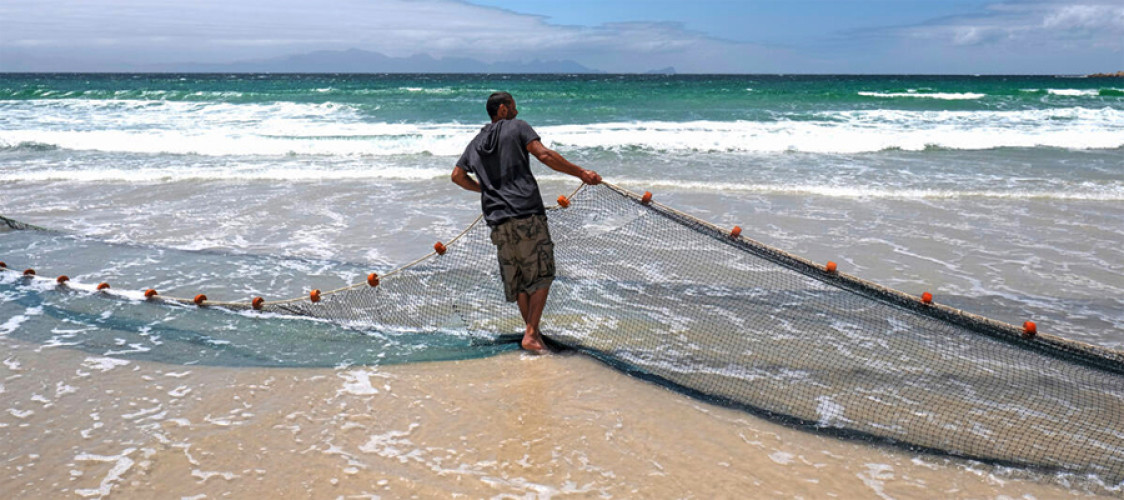
Small-scale fisheries account for 40 percent of global landings and support the livelihoods of some 500 million people around the world. Yet, managing these fisheries can be challenging. They are often informal in nature and target multiple species at the same time, making data collection more difficult.
Participatory co-management schemes, in which responsibility for fisheries management is shared between local communities, fishers and fish workers, scientists and policymakers, can help address these challenges by improving data collection, the quality of the information collected, decision-making, and compliance.
A clear example comes from Uruguay, where the yellow clam (Mesodesma mactroides) fishery has been under a formal co-management arrangement since 2012. Fisheries councils bring together national and local authorities, fisher representatives, law enforcement, and the scientific community to jointly oversee and manage the fishery.
FAO supported this effort and conducted a pilot study on the co-management of small-scale coastal fisheries, including the yellow clam fishery.
“The outcomes of the pilot were so successful that they triggered the institutionalization of fisheries co-management across the country,” says Omar Defeo, Tenured Professor at the Department of Sciences of the Universidad de la República de Uruguay and head of the Laboratory of Marine Sciences.
This process led to the establishment of five zonal and 14 local fisheries councils, covering several marine and freshwater species. As part of this system, Defeo - who also serves as official advisor to the National Directorate of Aquatic Resources (DINARA) at the Ministry of Livestock, Agriculture and Fisheries - conducts participatory stock assessments with yellow clam harvesters, many of whom are women.
Source: Online
























Copyright © 2026 Dairy & Poultry Expo. All Rights Reserved.
Website Design & Development ♡ MY SOFT IT
 EN
EN
 Chinese
 Turkish
 Indonesian
 German
 French
 Spanish
 Portuguese
 Russian
 Italian